
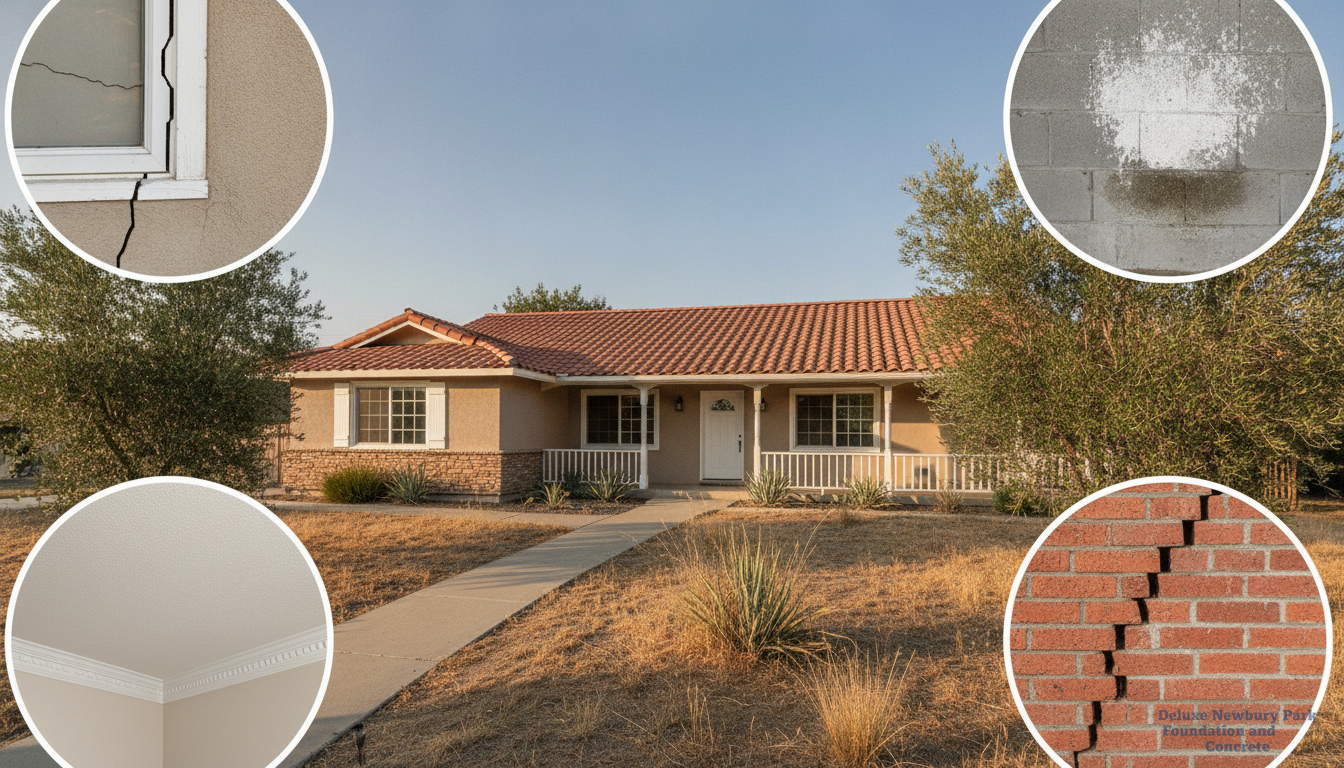
Why Newbury Park Homeowners Need to Watch Their Foundations Closely
Newbury Park sits in the heart of the Conejo Valley, a region underlain by expansive clay soils that swell when saturated and shrink during dry summer months. That constant cycle of movement puts enormous stress on residential foundations year after year. Add Southern California's proximity to active fault zones and the seasonal deluges that funnel runoff from the Santa Monica Mountains, and it becomes clear why foundation problems are more common here than in many other parts of the country.
The good news is that most foundation issues give homeowners plenty of warning before they escalate into serious structural problems. Knowing what to look for — and acting quickly — is the difference between a manageable repair and a five-figure structural overhaul. Below are the five most important warning signs to watch for, along with guidance on what each one typically means and how professional foundation inspection can protect your investment.
1. Cracks in Your Foundation Walls or Slab
Cracks are the most obvious and most misunderstood sign of foundation trouble. Not all cracks are equal, and learning to distinguish cosmetic from structural is the first step toward making an informed decision.
- Hairline vertical cracks less than 1/8 inch wide are common in poured concrete foundations and are usually the result of normal curing shrinkage. They still deserve sealing to prevent water intrusion.
- Diagonal cracks running from the corners of window or door openings often indicate differential settlement — one part of the foundation sinking faster than another.
- Horizontal cracks in block or poured walls are the most serious. They signal lateral soil pressure that is actively pushing the wall inward and require prompt professional evaluation.
- Stair-step cracks in brick or block mortar joints indicate differential movement and are common in older Newbury Park construction.
If you are seeing any cracks wider than 1/4 inch, horizontal fractures, or cracks that have grown noticeably in a short period, it is time to call our team. Our foundation crack repair service uses epoxy injection for dormant structural cracks and flexible polyurethane foam for active ones — both delivering a lasting, watertight seal.
2. Doors and Windows That Stick or Won't Close Properly
When a foundation settles unevenly, it causes the structural frame above it to rack — meaning the rectangular shape of the framing shifts slightly out of square. That shift shows up first at your doors and windows, because their frames are the most sensitive to any change in geometry.
If you have a door that suddenly requires extra force to latch, or a window that used to slide smoothly but now binds partway up, the cause may not be seasonal wood swelling. Look for gaps at the top corners of door frames, daylight visible between a door and its frame, or cracks radiating from the upper corners of window openings. These are reliable indicators of foundation movement in the surrounding area of the home.
A comprehensive foundation inspection and assessment will identify which part of the slab or stem wall is settling and give you a clear picture of what repair is needed. We serve homeowners throughout Newbury Park and across the broader Conejo Valley, including Thousand Oaks and Westlake Village.
3. Uneven or Sloping Floors
Place a marble on your living room floor. If it rolls consistently in one direction, your slab may have settled unevenly beneath you. Floor slopes of more than 1 inch over 10 feet are generally considered significant by structural engineers and should be evaluated.
In Newbury Park, sloping floors are frequently caused by the soil beneath a slab drying out and compacting during summer, creating voids that allow the concrete to descend. They can also result from expansive clay pushing sections of the slab upward — a condition called heaving — which creates a different kind of uneven surface.
Both settling and heaving can be addressed with targeted intervention. Our slab foundation repair team uses mudjacking and high-density polyurethane foam injection to lift settled sections back to their original elevation without demolishing and replacing the slab. The process is minimally invasive and can often be completed in a single day.
4. Water Intrusion, Efflorescence, or Persistent Dampness
A white chalky residue on your foundation walls — called efflorescence — is a telltale sign that water is migrating through the concrete and depositing mineral salts on the surface as it evaporates. It is harmless on its own but is a reliable indicator that water is regularly contacting your foundation.
Standing water near the foundation after rain, damp spots on a slab, or a musty smell in a lower-level room all point to drainage and waterproofing deficiencies that will cause cumulative damage over time. Hydrostatic pressure from saturated soil is a leading cause of crack propagation and can push water directly into living spaces.
Our foundation waterproofing solutions range from interior drainage channels and sump pump systems to full exterior membrane applications. We pair waterproofing with drainage correction to stop water at its source — redirecting it away from your home with French drains, catch basins, and proper site grading. This combination is especially important for hillside lots in Lake Sherwood and the elevated neighborhoods of Moorpark.
5. Visible Gaps Between Walls, Ceilings, or Floors
As a foundation moves, the structural connections between floors, walls, and ceilings are stressed. You may notice gaps appearing where interior walls meet the ceiling, separations between baseboards and the floor, or cracks running along drywall seams — particularly at 45-degree angles from window and door corners.
Exterior symptoms include gaps between the siding and the foundation, separation of the chimney from the main structure, or visible tilt in porch columns or exterior stairs. These are signs that differential settlement has progressed enough to affect the entire building envelope, and a professional assessment is urgently needed.
In some cases these symptoms appear after a seismic event — even a moderate one can shift foundations enough to open gaps that weren't there before. Newbury Park's location within a seismically active region of Southern California makes post-earthquake inspections a smart precaution for any homeowner.
Act Early and Save Thousands
Every one of these warning signs is easier and less expensive to address when caught early. A crack that costs a few hundred dollars to seal today can allow water infiltration for years, corroding rebar and widening to the point where major structural repair is needed. A slightly sticky door may be the only warning you get before a slab settlement problem requires foam lifting across multiple sections of your home.
Deluxe Newbury Park Foundation and Concrete is available Monday through Sunday, 8:00 AM to 6:00 PM, to inspect your home and give you a clear, honest assessment. We serve Newbury Park and all surrounding communities in Ventura County. Call us at (805) 554-0860 or explore our full range of foundation inspection and repair services to schedule your evaluation today.